

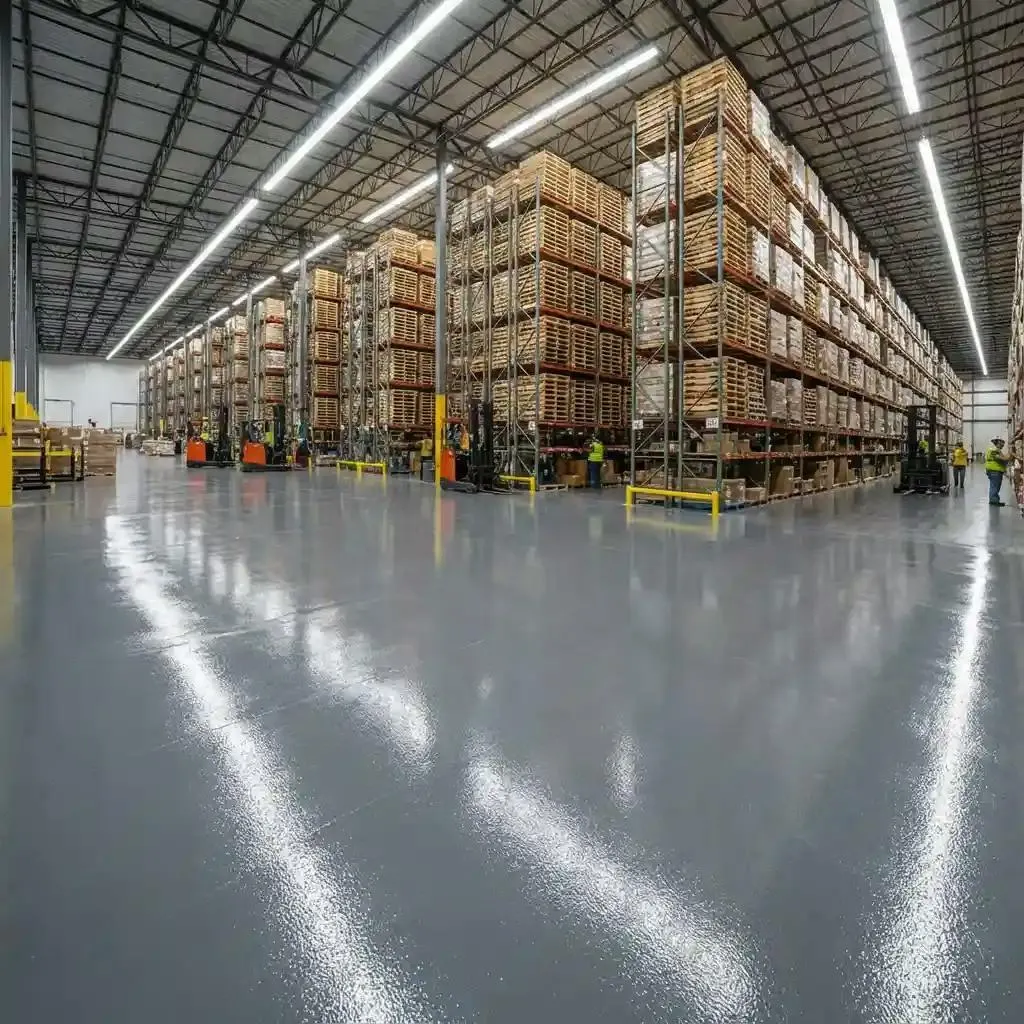
Warehouse floors support repeated movement from forklifts, pallet equipment and employees throughout the working day. Their condition affects cleaning routines, material handling and the overall usability of the facility. A professionally specified warehouse floor coating can help protect suitable concrete surfaces while providing a finish matched to operational requirements. However, surface coatings must be selected according to loading conditions, contamination risks and existing slab quality. Understanding these factors helps warehouse managers plan improvements that support daily activities without introducing avoidable disruption.
Examine Traffic Patterns Before Selecting Materials
Not all parts of a warehouse experience the same degree of wear. Loading zones encounter concentrated vehicle activity, while storage aisles may receive repeated travel along predictable routes. Packing stations and pedestrian walkways introduce different requirements. Facility managers should map these activities before choosing a flooring system. Concentrated turning movements and equipment loads can create demands beyond ordinary foot traffic. A practical assessment identifies areas needing additional protection or repairs. Matching materials to traffic patterns helps avoid treating every section of a large facility as though conditions were identical.
Assess Concrete Damage and Existing Coatings
An existing warehouse floor may contain cracks, oil contamination, worn coatings or damage caused by repeated equipment movement. Surface appearance alone does not reveal whether the underlying concrete can support another coating. Contractors should inspect joints, assess substrate condition and investigate any signs of moisture-related problems. Localized repairs may be sufficient in some areas, while extensive deterioration can require broader treatment. Removing poorly bonded materials is essential before applying a new system. The condition assessment should guide preparation methods and help establish a realistic installation budget.
Consider Chemical Exposure and Cleaning Demands
Warehouse operations vary considerably in the substances handled and the cleaning processes used. Some facilities encounter only ordinary dust and tracked-in moisture, while others experience oils, detergents or specialized chemicals. Coating resistance depends on the exact formulation, concentration and duration of exposure. Facility managers should identify relevant substances before requesting material recommendations. Cleaning equipment and maintenance schedules also influence suitability. A system selected primarily for appearance may not perform well under aggressive cleaning conditions. Technical compatibility helps protect the floor and preserve practical maintenance arrangements.
Match Industrial Systems With Operating Conditions
Facilities requiring industrial epoxy flooring should evaluate coating thickness, mechanical performance, slip resistance and substrate suitability together. Epoxy can provide protective benefits in appropriate industrial environments, but heavy impacts or demanding chemical exposure may require specialized formulations. The correct specification should be based on actual operations rather than broad claims of durability. Contractors should also evaluate joint detailing and areas exposed to repeated loading. A site-specific approach helps ensure that the selected system matches the expected conditions instead of relying on a universal recommendation.
Plan Installation Around Warehouse Scheduling
Floor upgrades can temporarily restrict loading access, forklift routes and storage areas. For active facilities, planning around operating hours may be as important as selecting materials. Contractors and managers should identify which sections can be closed and whether phased installation is practical. Surface preparation may produce noise and require dust-control measures. Curing requirements also determine when equipment can return. Clear communication with warehouse supervisors helps prevent premature use of freshly coated areas. A coordinated schedule can reduce disruption without compromising essential preparation and application procedures.
Include Traction and Marking Requirements
Warehouse safety depends on more than coating durability. Areas exposed to moisture or spills may require an appropriately textured finish, while pedestrian routes can benefit from clear visual identification. Surface texture must also remain compatible with cleaning equipment and operational needs. Floor markings should be installed using suitable materials and methods if they form part of the project. Businesses should evaluate workplace safety requirements separately from decorative preferences. Planning traction and markings together helps create a functional layout that supports movement without assuming coatings alone can eliminate hazards.
Conclusion
Warehouse flooring improvements are most effective when they respond to real traffic patterns, equipment loads and maintenance requirements. Appropriate surface preparation and realistic installation scheduling are equally important to achieving dependable results. Ontario facility managers can explore industrial and commercial coating options through quickfxepoxy.ca, which serves warehouse and business environments across its service regions. Arranging an on-site evaluation can help identify substrate concerns and suitable installation methods before work begins. Careful planning supports a more functional facility while reducing avoidable disruption to everyday operations.