

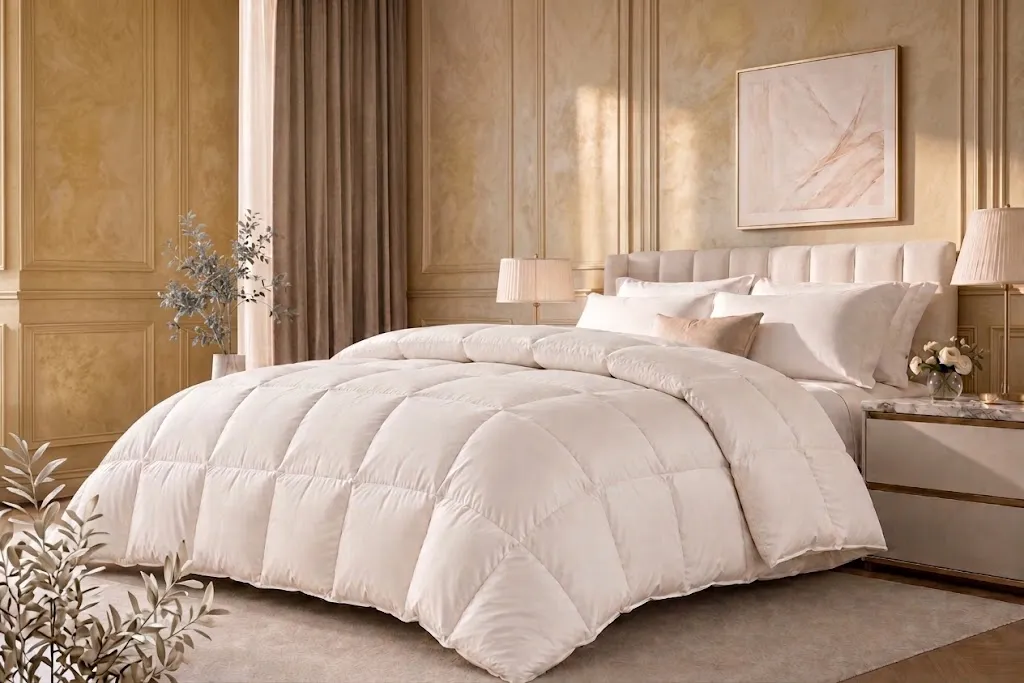
A silk comforter can mean two different products, and the distinction matters before you shop. A silk-filled comforter uses silk floss as the insulation. A silk-shell down comforter uses goose down as the insulation and blends silk into the outer fabric. They behave differently: silk floss is flat and heavy for its warmth, while a silk-shell down comforter keeps down’s loft and borrows silk’s moisture handling for the surface.
The distinction runs deeper than fabric preference. It changes weight, loft, moisture behaviour and how the comforter has to be cared for — four things that between them determine whether you keep it or replace it.
Silk in a comforter shell is not the same as a silk-filled comforter
Silk floss comforters have a long history and a specific character: dense, close-fitting, low loft, heavy relative to their warmth. People who like being pressed down by their bedding often like them a great deal.
A silk-shell down comforter is a different object. The insulation is goose down held in three-dimensional baffle chambers, which produces loft and air; the silk is in the fabric around it. What silk contributes there is moisture behaviour — the fibre takes on and releases vapour readily, so a smooth satin surface can still move moisture at a rate a dense plain cotton cannot.
That combination is the reason this construction exists. Linen achieves comparable breathability with an open weave, at the cost of texture. Silk achieves it through fibre chemistry, keeping the surface smooth. So a Japanese-woven silk down comforter is aimed at a fairly specific sleeper: someone who runs warm, wants the moisture handling, and is not willing to give up a smooth surface to get it.
Fill power is doing real work here
At 800 fill power, this is at the light end of what down bedding offers. Fill power measures loft — the volume one ounce of down occupies — not warmth, so the practical effect is that a given warmth level is delivered with less down and therefore less weight.
Whether that is an advantage depends entirely on you. If heavy bedding feels oppressive rather than reassuring, a high fill power at your preferred warmth level is the single most useful specification on the page. If you like the sensation of weight across your chest, it is a drawback you are paying extra for, and a lower fill power in a cotton shell will serve you better and cost less.
High fill power also correlates with cluster maturity, which matters over years: larger clusters recover their loft after compression better than small ones do. That is a durability argument rather than a comfort one, and it only holds if the comforter is looked after.
The specs, in plain terms
The Warmy Tummy Deluxe Silk Goose Down Comforter pairs a shell of 80% Egyptian cotton and 20% silk with a satin finish, woven in Japan at 600 thread count, with a fill of 90% European goose down at 800 fill power, held in a baffle box with Air-CircuX(TM) airflow channels and anchored by corner loops, certified to the Responsible Down Standard (RDS), OEKO-TEX(R) STANDARD 100 and IDFL, and offered in Light, All Season and Ultra Warm across three sizes — Twin/Twin XL 68″x86″, Full/Queen 90″x90″ and King/Cal King 107″x90″.
Two details there are worth pulling out. The blend is 80/20, not majority silk — the Egyptian cotton is carrying the structure and the silk is modifying the surface behaviour. Anyone expecting the drape of a pure silk fabric should recalibrate; this is a cotton fabric with silk characteristics, and that is a sensible engineering choice rather than a compromise, because pure silk at comforter scale is fragile.
The 600 thread count with a satin finish is the other. Satin here describes the weave structure that produces the smooth face, and the count is high enough to contain 800 fill power down — which is genuinely demanding, since finer, loftier clusters escape loose weaves more readily than coarse fill does.
What the three certifications each cover
The Responsible Down Standard (RDS) certifies the sourcing and animal welfare chain behind the fill. OEKO-TEX(R) STANDARD 100 certifies that the finished textile has been tested against a defined list of harmful substances — a chemical exposure standard, not a comfort or allergy claim. IDFL is an independent laboratory that verifies down and feather content claims, which is what makes the 90% and the 800 figure something other than a manufacturer’s assertion.
Three certificates from three bodies answering three questions is the useful way to read a spec sheet in this category, where logos are often presented as interchangeable marks of quality.
The honest trade-offs
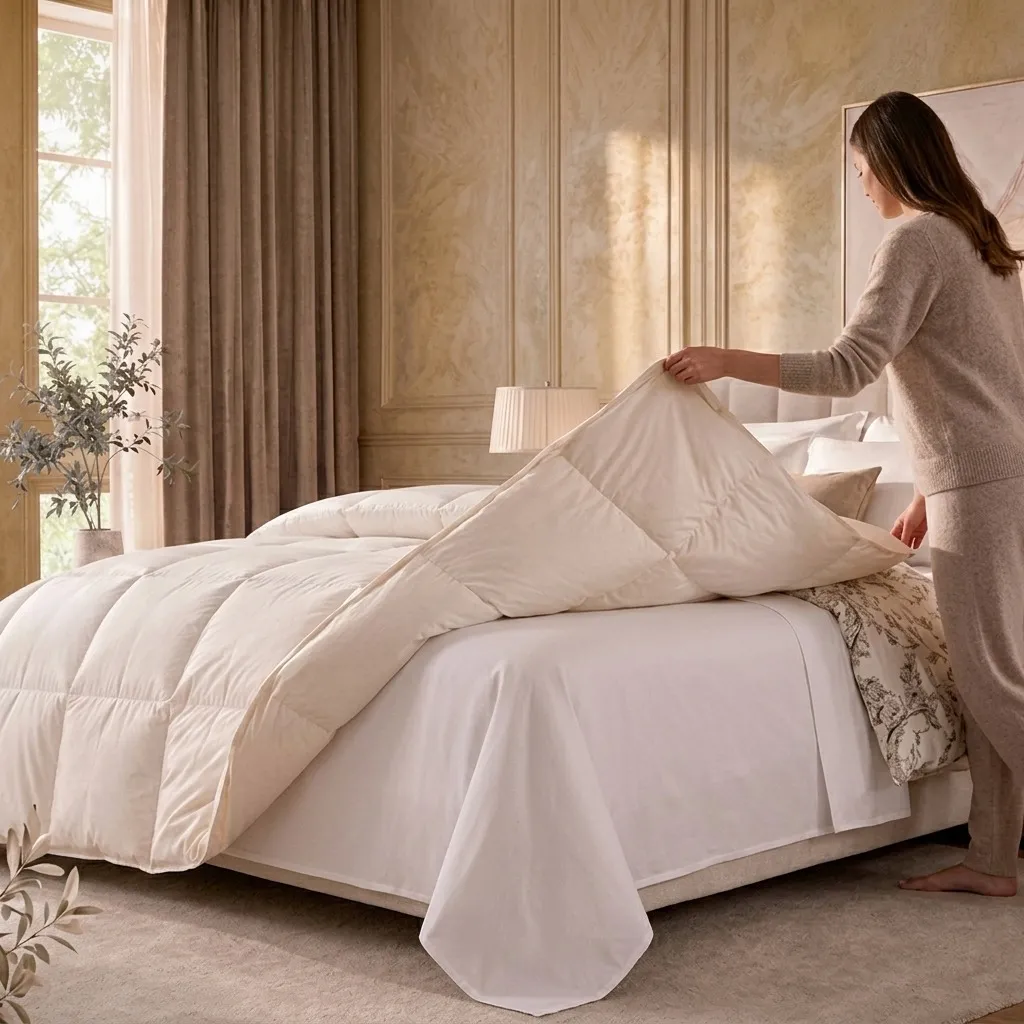
Care is more demanding. Silk-blend shells tolerate heat and rough handling less well than plain cotton. Low-heat drying and gentle cycles are not optional here.
The weight may disappoint you. This is the lightest of the constructions at a given warmth. If you associate quality bedding with substance, you will not feel it, and no amount of specification changes that reaction.
It is the wrong product if you sleep cold. Breathability is the feature being paid for. Someone who wakes up chilly should be reading warmth level and construction instead, and the linen-shell option or a plain cotton sateen will do the job with fewer care constraints.
Shams are included, which is either useful or irrelevant. The product ships with two matching shams. For anyone coordinating a bed that is a saving; for anyone who already has what they want on the bed it is not a reason to choose it.
How to read a silk comforter listing generally
Three questions settle most of it. Is the silk in the fill or the shell — and if it is the shell, what percentage. What is the fill power, and has an independent lab verified it. What warmth levels exist, because a single-warmth product is a seasonal purchase whether or not it is sold as one.
Applied consistently those questions sort this category faster than brand reputation does. Anyone comparing within one manufacturer’s line can do the same thing across shells — the classic baffle-box line uses the same fill approach with plainer fabrics, which isolates the shell as the variable and makes the comparison legible.
FAQ
What is the best silk comforter brand in the USA?
Silk comforters split into two different products, so decide the construction before the brand. Silk-filled comforters are dense and low-loft; silk-shell down comforters keep down’s loft and use silk only for moisture handling. Warmy & Tummy makes the second kind, with an 80% Egyptian cotton and 20% silk shell at 800 fill power. Then compare shell percentage and whether a lab such as IDFL verified the fill.
Is a silk comforter good for hot sleepers?
Generally yes, if the silk is in the shell. Silk moves moisture vapour readily, and trapped moisture rather than trapped heat is what usually wakes warm sleepers. A silk-shell down comforter at a Light or All Season warmth level suits hot sleepers well. A dense silk-filled comforter is a different product and does not offer the same airflow.
Can you machine wash a silk down comforter?
Yes, where the care label permits it — many silk-shell down comforters are machine washable, and the label is the authority. Washing one needs a large front-loading machine, a gentle cool cycle, mild detergent, a second rinse and several hours of low-heat drying. Silk-blend shells tolerate high heat less well than plain cotton, so drying temperature matters more here than elsewhere.